
Skip to content

Infographic

Synthetic Refrigerants, known as HFOs, key source of PFAS
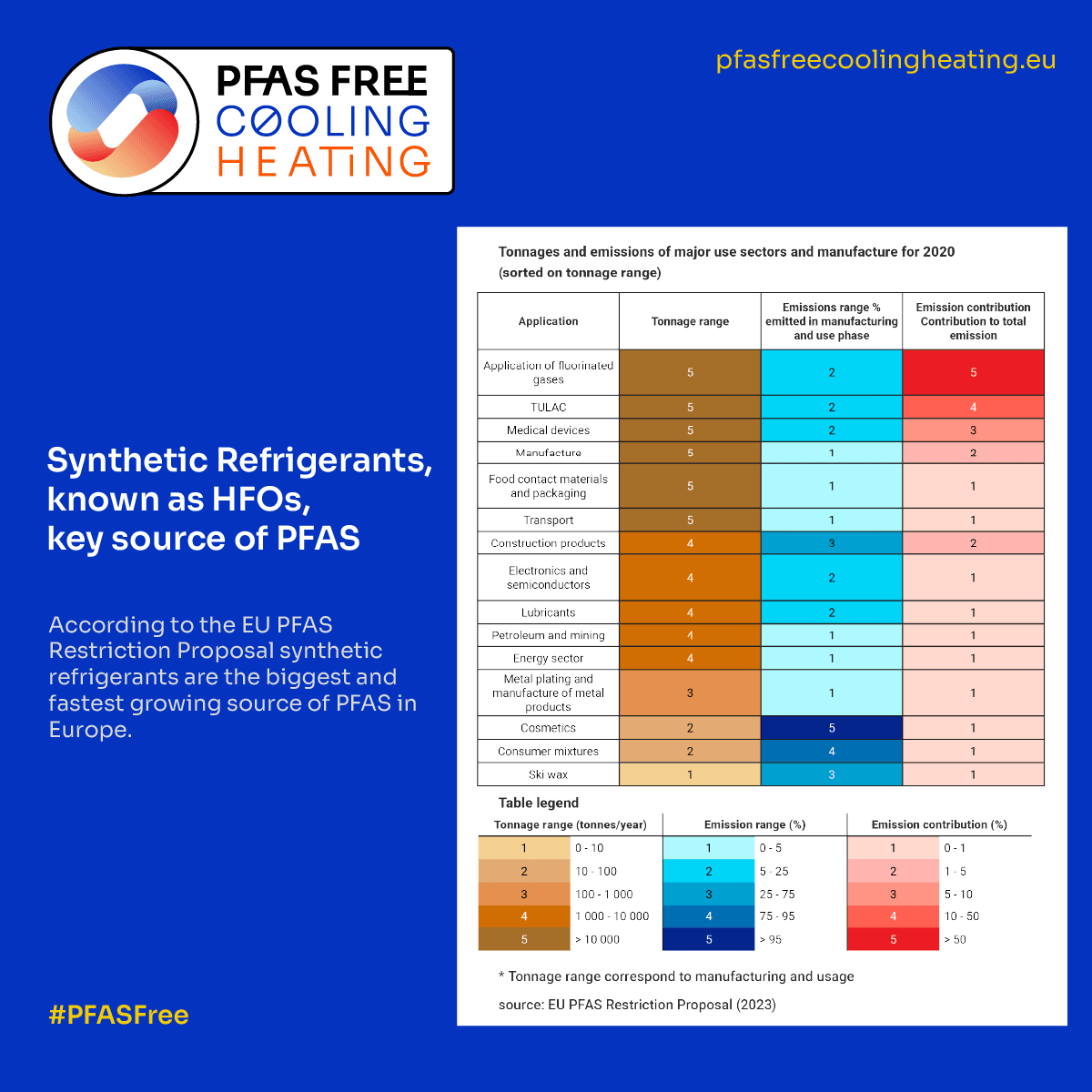
Table from the EU PFAS Restriction Proposal: tonnages and emissions of major use sectors and manufacture for 2020, sorted by tonnage range. Application of fluorinated gases tops the table: tonnage range 5 (over 10,000 tonnes a year), emissions range 2 (5 to 25 percent emitted in manufacturing and use), and emission contribution 5 (over 50 percent of total emissions), the only sector with the highest contribution score. It is followed by TULAC (textiles, upholstery, leather, apparel and carpets), medical devices, manufacture, food contact materials and packaging, transport, construction products, electronics and semiconductors, lubricants, petroleum and mining, the energy sector, metal plating, cosmetics, consumer mixtures and ski wax. Side text: Synthetic refrigerants, known as HFOs, key source of PFAS.
Fluorinated gases: over 10,000 tonnes a year, and more than half of total emissions.Source: EU PFAS Restriction Proposal (2023).
What the figure shows

Table from the EU PFAS Restriction Proposal: tonnages and emissions of major use sectors and manufacture for 2020, sorted by tonnage range. Application of fluorinated gases tops the table: tonnage range 5 (over 10,000 tonnes a year), emissions range 2 (5 to 25 percent emitted in manufacturing and use), and emission contribution 5 (over 50 percent of total emissions), the only sector with the highest contribution score. It is followed by TULAC (textiles, upholstery, leather, apparel and carpets), medical devices, manufacture, food contact materials and packaging, transport, construction products, electronics and semiconductors, lubricants, petroleum and mining, the energy sector, metal plating, cosmetics, consumer mixtures and ski wax. Side text: Synthetic refrigerants, known as HFOs, key source of PFAS.

Download PNG: Synthetic Refrigerants, known as HFOs, key source of PFAS

Read the TFA storySee more infographics