


The cooling and heating we rely on every day has a hidden cost.
Heat pumps, air conditioners and fridges move heat with a refrigerant circulating inside them, in homes, offices, supermarkets and data centres. Many of those refrigerants are forever chemicals.
Everyday
Cooling and heating run on refrigerants
The problem
From a leak to the sky, and back down to us
01
Many refrigerants are synthetic F-gases
Synthetic refrigerants like HFCs and HFOs replaced ozone-depleting substances. Many of them are PFAS: per- and polyfluoroalkyl substances, the “forever chemicals” that do not break down naturally and have been linked to numerous health issues.
02
They leak into the atmosphere
When refrigerants like HFCs, HCFCs and HFOs leak from equipment, they end up in the air we all share.
03
Up there, they break down into TFA
UV radiation breaks them down, producing harmful by-products like trifluoroacetic acid (TFA), a persistent PFAS compound.
Rain
TFA comes back down with the rain
TFA is washed out of the atmosphere and accumulates in water bodies, threatening aquatic ecosystems and human water supplies.
It reaches us
In our water, in our food, and it stays

Forever
It does not break down.
TFA resists degradation. Its long-term presence leads to environmental contamination and bioaccumulation, posing serious health risks.
The evidence keeps growing
All TFA news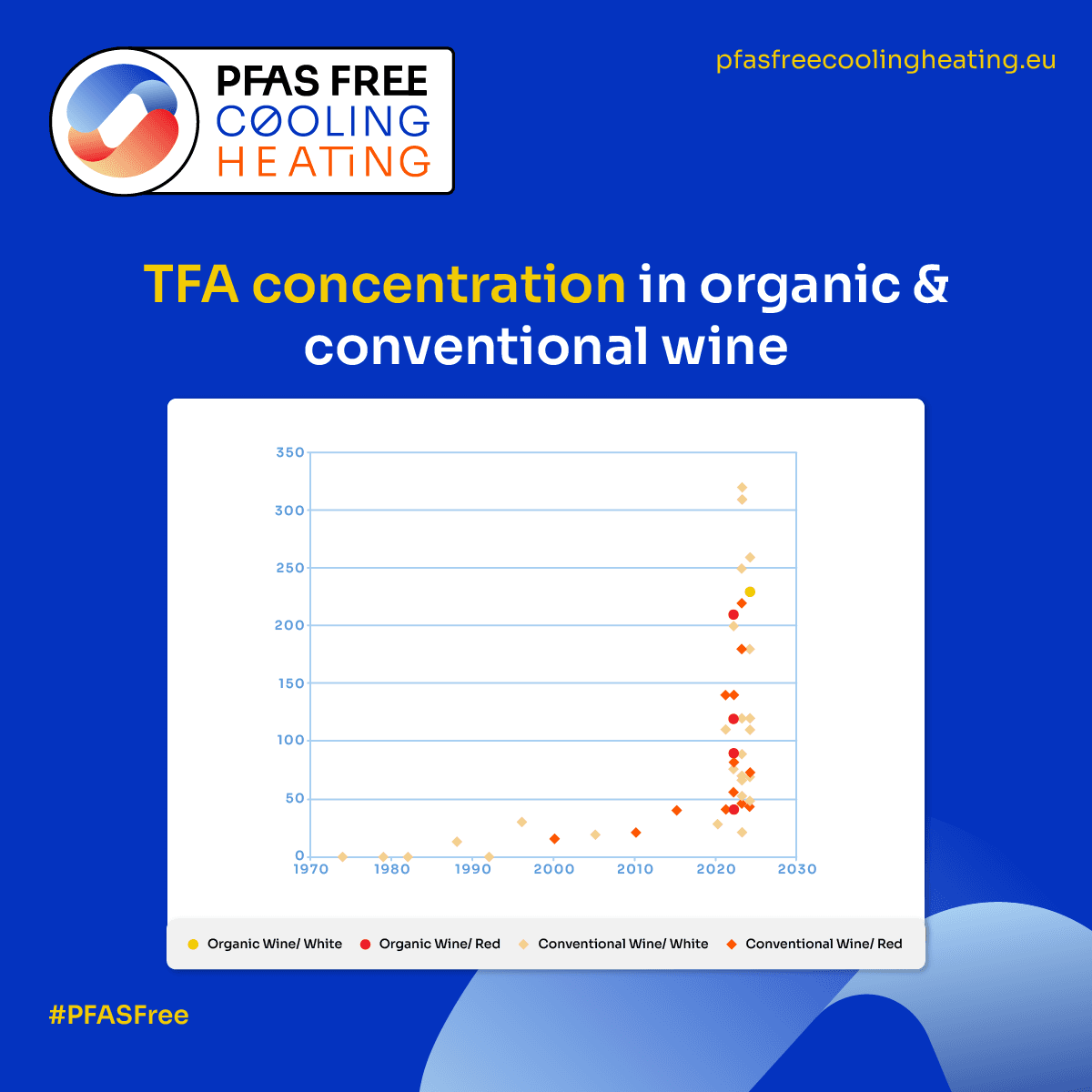
PFAS
New research titled “MESSAGE FROM THE BOTTLE: The Rapid Rise of TFA Contamination Across the EU
The new research titled “MESSAGE FROM THE BOTTLE: The Rapid Rise of TFA Contamination Across the EU,” published by members of the European Pesticide Action Network Europe (PAN Europe), reveals a startling and rapidly increasing presence of trifluoroacetic acid (TFA) in European wines. This study underscores the pervasive nature of PFAS contamination and highlights the…

PFAS
How Harmful Is TFA?
A large and growing number of studies have reported the rapid proliferation in the environment of trifluoroacetic acid (TFA), a by-product of certain f-gases in the atmosphere (notably HFO-1234yf) as well as the breakdown of certain pharmaceuticals, pesticides and other chemicals. This begs the question: how harmful is TFA to human beings? TFA is an ultrashort-chain…
Oceania
Two Studies Confirm that HFO-1234ze(E) Breaks Down into Some HFC-23 in the Atmosphere
Two recent studies have confirmed that HFO-1234ze(E), a commonly used ultra-low-GWP replacement for HFCs, breaks down in the atmosphere to produce a small amount of HFC-23, which has one of the greatest global warming impacts. The two studies are “Fluoroform (CHF3) Production from CF3CHO Photolysis and Implications for the Decomposition of Hydrofluoroolefins and Hydrochlorofluoroolefins in…
Europe
‘Everywhere in Wallonia, Tap Water Is Safe to Drink’
This reassurance comes as the Belgian region finds TFA in drinking water in 598 out of 642 distribution zones, including 13 in which the 2.2mcg/L guidance value was exceeded.

Europe
Researchers Find Growing Levels of TFA in Danish Groundwater Over 60 Years
The study looked at concentrations of TFA – linked to f-gas degradation – in 113 Danish groundwater-monitoring wells.
Europe
Swedish Researchers Find Elevated Levels of TFA in Juices and Kids’ Purées
Health impacts are uncertain, but data suggest children’s intake of orange juice and some purées could result in ‘significant exposure’ to TFA.

North America
Canada Seeks Feedback on PFAS, Including F-Gases
The deadline for comments on the ‘Revised Risk Management Scope’ is September 11.

Europe
Study Urges Audit of Teflon Plants’ Destruction of HFC-23 Byproduct
Global levels of the super greenhouse gas far exceed reported emissions, suggesting lapses in abatement measures.

North America
TFA Most Widely Detected PFAS in Michigan Rainwater Study
An atmospheric byproduct of HFO-1234yf, TFA was found in rainwater samples in Ann Arbor, Dearborn and Detroit collected by NGOs.

The turning point
Europe can act
The coalition asks for strong PFAS restrictions across the EEA that reshape the HVAC&R industry to be greener and more sustainable, backed by science and evidence-based data for all stakeholders.
The legislative roadmap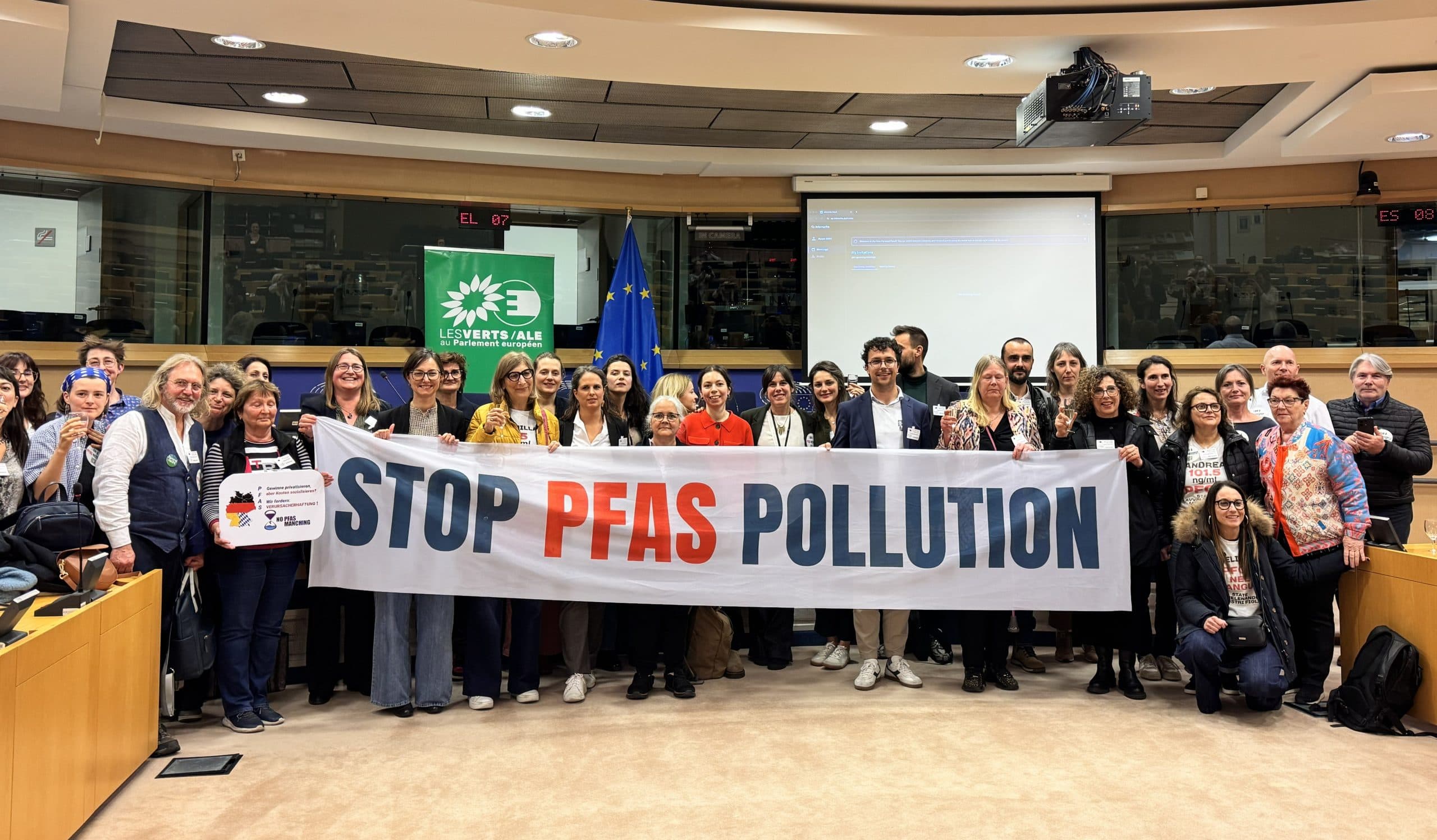
The solution
Natural refrigerants: no PFAS, no TFA
CO₂, propane, ammonia, water and air do the same job. They are energy efficient, do not deplete the ozone layer, have a negligible global warming potential (over both 20 and 100 years) and are PFAS free. They are future proof today.
- R744CO2Carbon dioxide
- R290C3H8Propane
- R717NH3Ammonia
- R718H2OWater
- R729AirAir
Available today
The technology is ready, and our members build it
In Europe alone, there are hundreds of companies providing PFAS free alternatives using natural refrigerants such as CO₂, propane, ammonia, air and water. These technologies have scaled over the last two decades and are cost competitive.
Meet our membersSolutions in the news
All news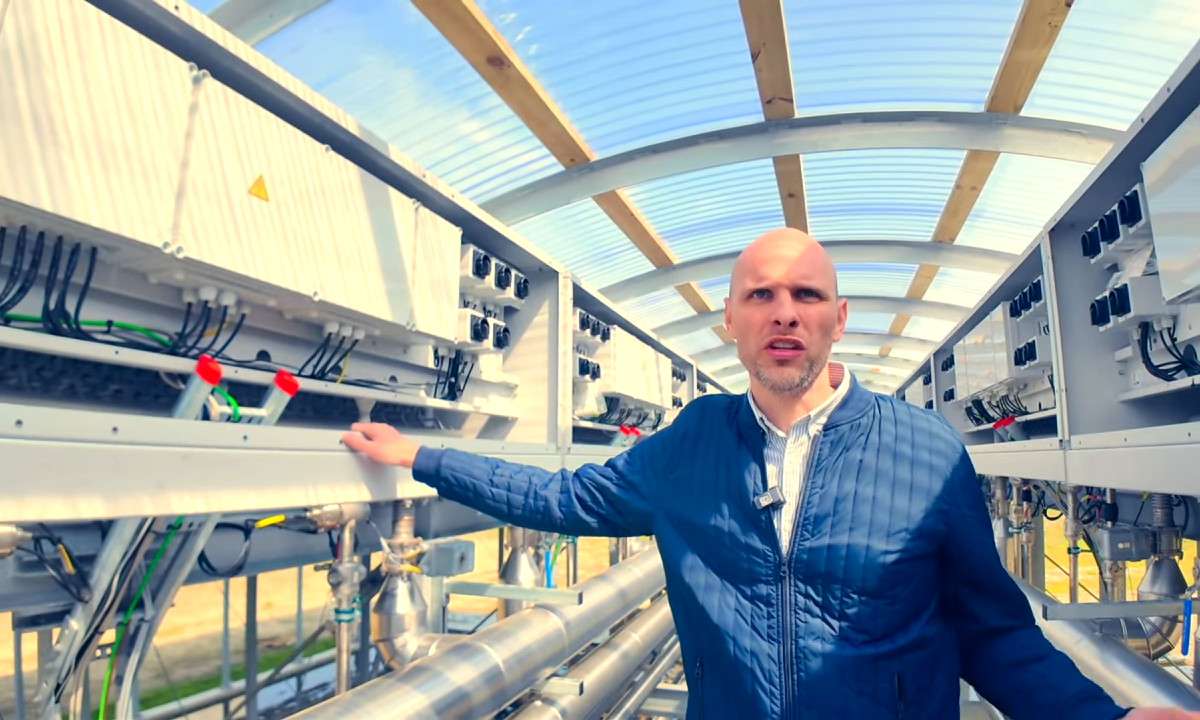
Europe
In 9 Months, Fenagy Built and Connected a 7MW CO2 Heat Pump to a Town’s District Heating Network
With a 13MW system currently in production, Fenagy sees CO2 as a ‘perfect’ fit for the demand for green district heating in Europe.
Europe
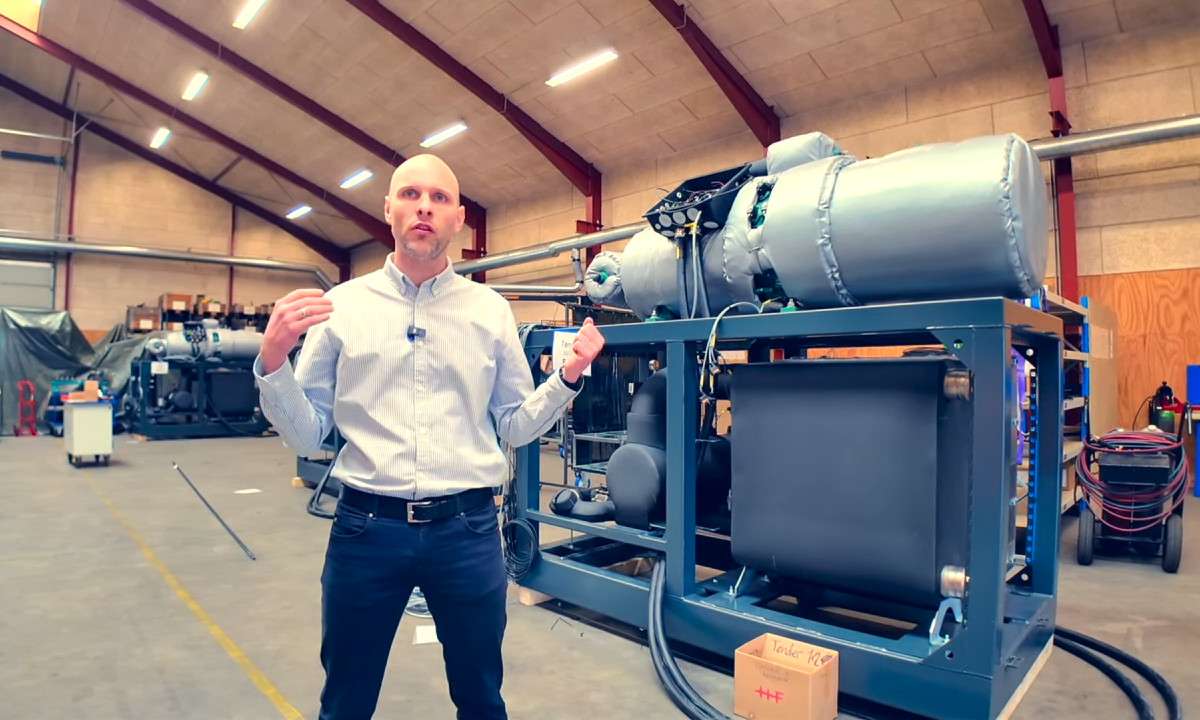
Fenagy Shows Off 3MW CO2 Heat Pump Rack and New 1MW Isobutane Heat Pump in Exclusive Factory Tour Video
The Danish manufacturer is ready to meet the European demand for large-scale heat pumps.
Europe
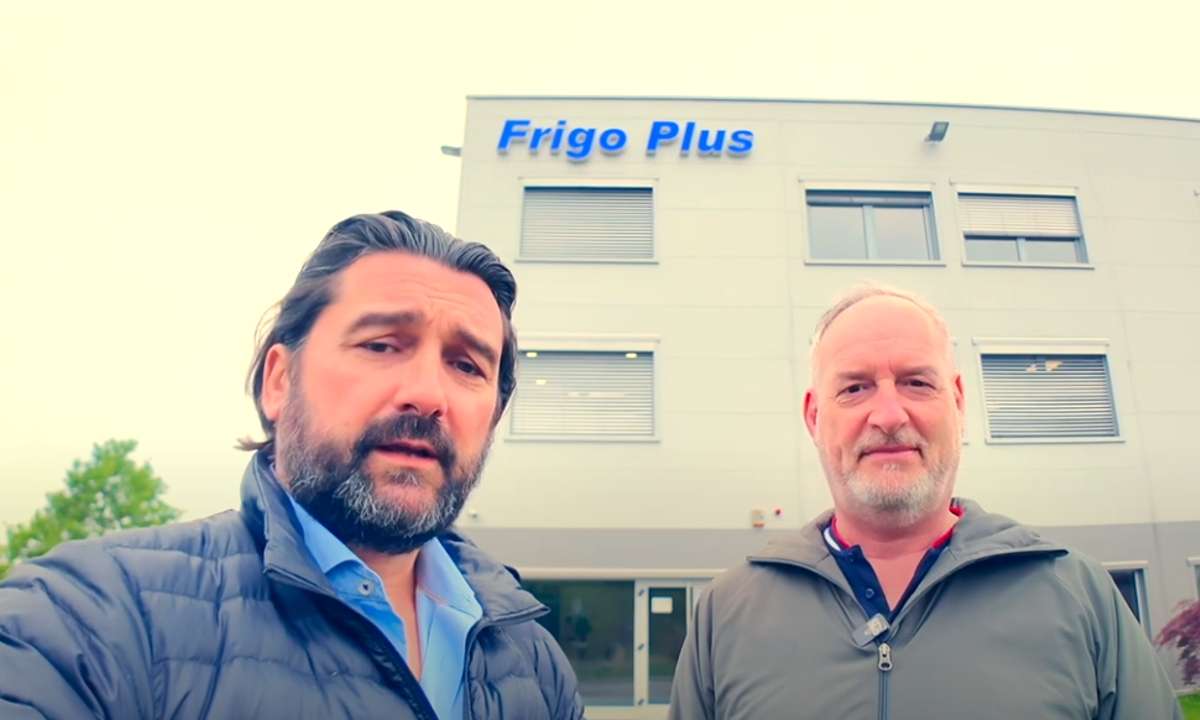
Secon Invests in New Croatian Production Facility for Hydrocarbon Units
The new premises in Zagreb could produce up to 2,500 hydrocarbon units per year to meet growing demand.

Europe
Busworld 2023 sees rising number of R744-based HVAC systems.
ATMOsphere delegates interviewed Karsten Mundt, Sales Director International – Bus Division, of Konvekta, a Germany-based OEM specialized in air-conditioning, heating, ventilation and refrigeration for earthbound utility vehicles with natural refrigerants, to reflect on the market and its future from a refrigerant perspective. Mundt: Indeed, we are proud to have been the first one to believe…
Europe
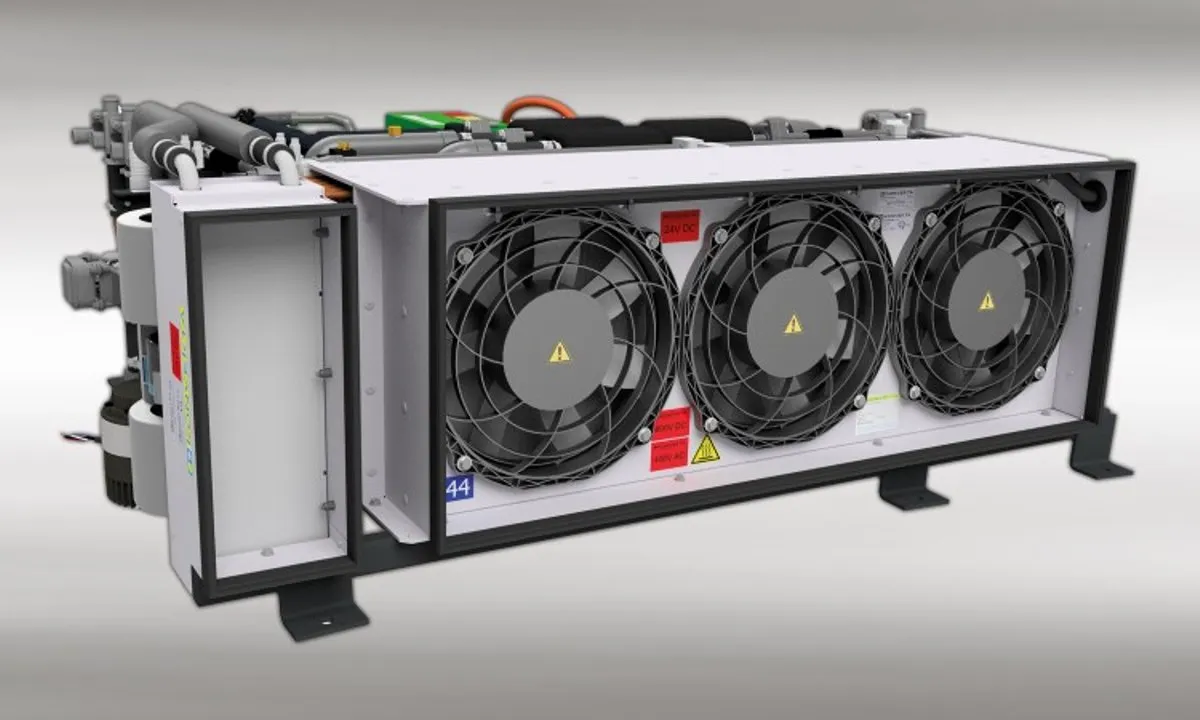
Konvekta’s CO2 Heat Pump Nominated for Busworld Innovation Award 2023
The German manufacturer’s R744 heat pump provides energy-efficient air-conditioning and heating for electric double-decker buses.

Heat Pumps
Konvekta Announces ‘Refrigerant Charge Balancing’ for E-Bus CO2 Heat Pump
The new technology ensures that the optimal quantity of refrigerant is always available to the heat pump, says the German manufacturer.
PFAS
University of Illinois Researchers Develop Economical Way to Remove TFA from Water
Researchers from the University of Illinois, Urbana-Champaign have developed an electrochemical process designed to economically remove up to 86% of ultrashort-chain PFAS trifluoroacetic acid (TFA), an f-gas byproduct, as well as long-chain PFAS from water intended for human consumption. A study describing the process – “Integrating redox-electrodialysis and electrosorption for the removal of ultrashort- to long-chain…
Be part of the change
Join the businesses accelerating the shift to natural refrigerants, or follow the latest on PFAS-free cooling and heating.
FAQ
Questions and answers
What are PFAS?
Per- and polyfluoroalkyl substances (PFAS) are a group of synthetic chemicals widely used in industrial applications and consumer products for their water- and heat-resistant properties. Known as “forever chemicals”, they do not break down naturally in the environment and have been linked to numerous health issues.
What do refrigerants have to do with PFAS?
Synthetic refrigerants such as HFCs, HCFCs and HFOs are used in cooling and heating equipment. When they leak into the atmosphere, UV radiation breaks them down, producing harmful by-products such as trifluoroacetic acid (TFA).
What is TFA, and why does it matter?
TFA is a persistent PFAS compound that resists degradation and accumulates in water bodies, threatening aquatic ecosystems and human water supplies. Its long-term presence leads to environmental contamination and bioaccumulation, posing serious health risks.
Why is the HVAC&R industry part of the problem?
With the phase-out of ozone-depleting substances, reliance on HFCs and HFOs has grown, leading to more TFA formation and PFAS contamination from refrigerant leaks.
What are the PFAS-free alternatives?
Natural refrigerants such as CO₂, propane and other hydrocarbons, ammonia, air and water. They are energy efficient, do not deplete the ozone layer, have a negligible global warming potential (over both 20 and 100 years) and are PFAS-free.
Are these alternatives available and affordable today?
Yes. In Europe alone, hundreds of companies provide PFAS-free equipment using natural refrigerants. These technologies have scaled over the last two decades and are cost competitive: they are future-proof today.
What does the coalition ask for?
Strong PFAS restrictions across the EEA that reshape the HVAC&R industry to be greener and more sustainable, backed by science and evidence-based data for all stakeholders.
More questions answered on NaturalRefrigerants.com (opens in a new tab)